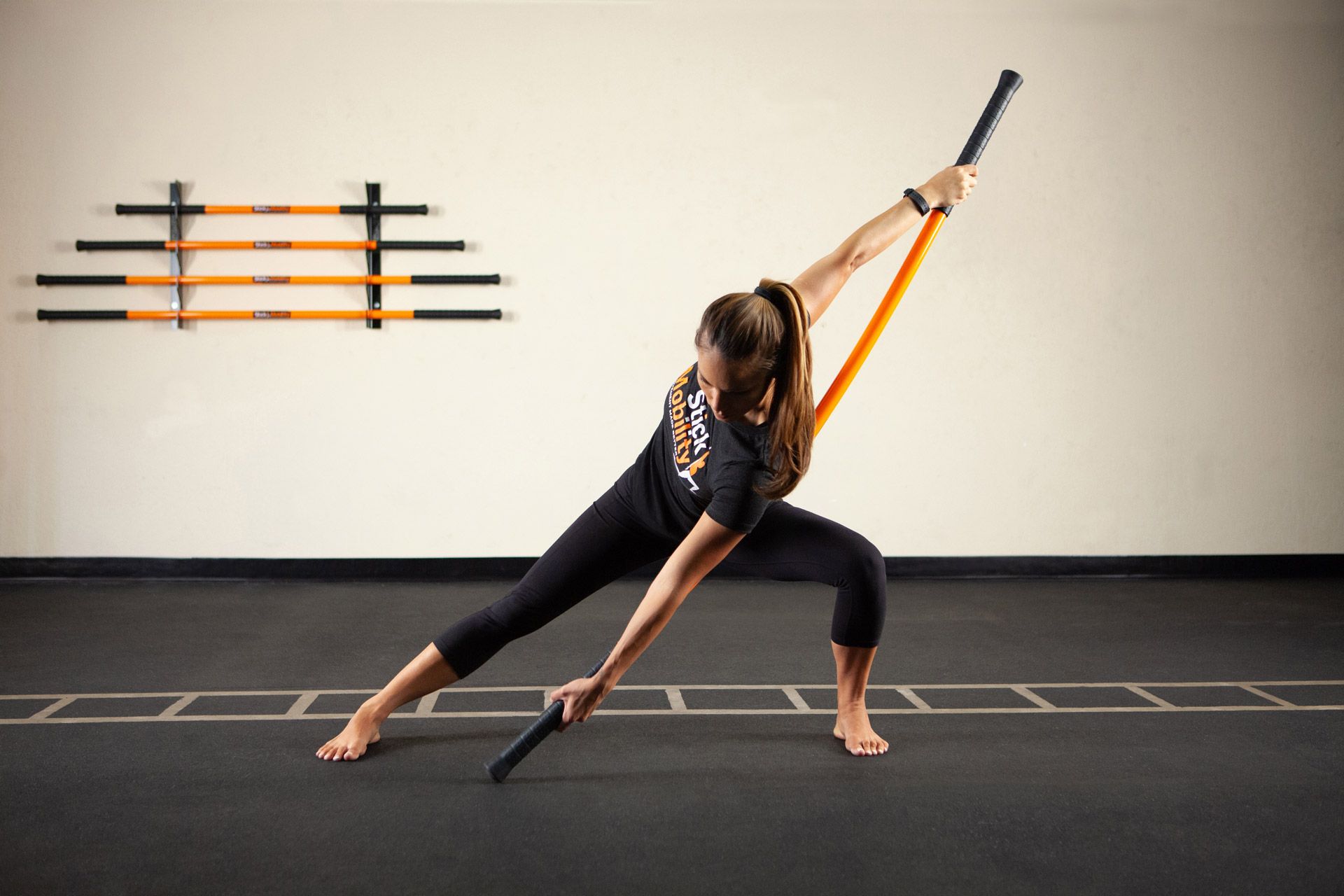
Useful mobility is active and controlled: create room at the ankles and hips, then own that range under light tension.
Photo: Movement-specialistLicenseSnowboard mobility: ankles, hips, done
You need enough range to ride comfortably, not circus flexibility. Ten quiet minutes is plenty.
Free the ankles
Use slow knee-to-wall rocks with the heel down. Keep the knee over the middle toes and stop before pinching or pain.
Move the hips
Try supported 90/90 switches and gentle hip airplanes. Use a wall. Smooth control matters more than reaching the floor.
Related lesson
Watch the movement.
This clip matches the guide. YouTube loads only when you press play.

Beginner / conditioning / 12:00
12-minute snowboard conditioning workout
By Snowboard AddictionKeep it short
Five to ten minutes after a walk or workout is enough. Before riding, use dynamic movement and build intensity gradually.
Profile-led equipment
Mobility tools
A floor and a wall cover most of this. These help with the ankle and hip work specifically.
- Floor work · Useful nextOptional profile examplesSee market examples
Exercise mat
Adds comfort for dead bugs, side planks, 90/90 switches and recovery work.
Check: Choose enough grip that hands and feet stay planted during controlled movement. - Recovery · Optional progressionOptional profile examplesSee market examples
Foam roller + mobility ball
Offers a simple option for short post-training soft-tissue and mobility sessions.
Check: Use tolerable pressure and avoid rolling directly over injured or painful areas. - Assistance + resistance · Optional progressionOptional profile examplesSee market examples
Long resistance band
Can support split squats or add progressive resistance to strength work.
Check: Inspect for damage, anchor securely and keep the band away from the face. - Balance progression · Optional progressionOptional profile examplesSee market examples
Balance pad
Progresses single-leg balance after stable floor control is easy.
Check: Place it beside support and do not use unstable surfaces for jumping drills.