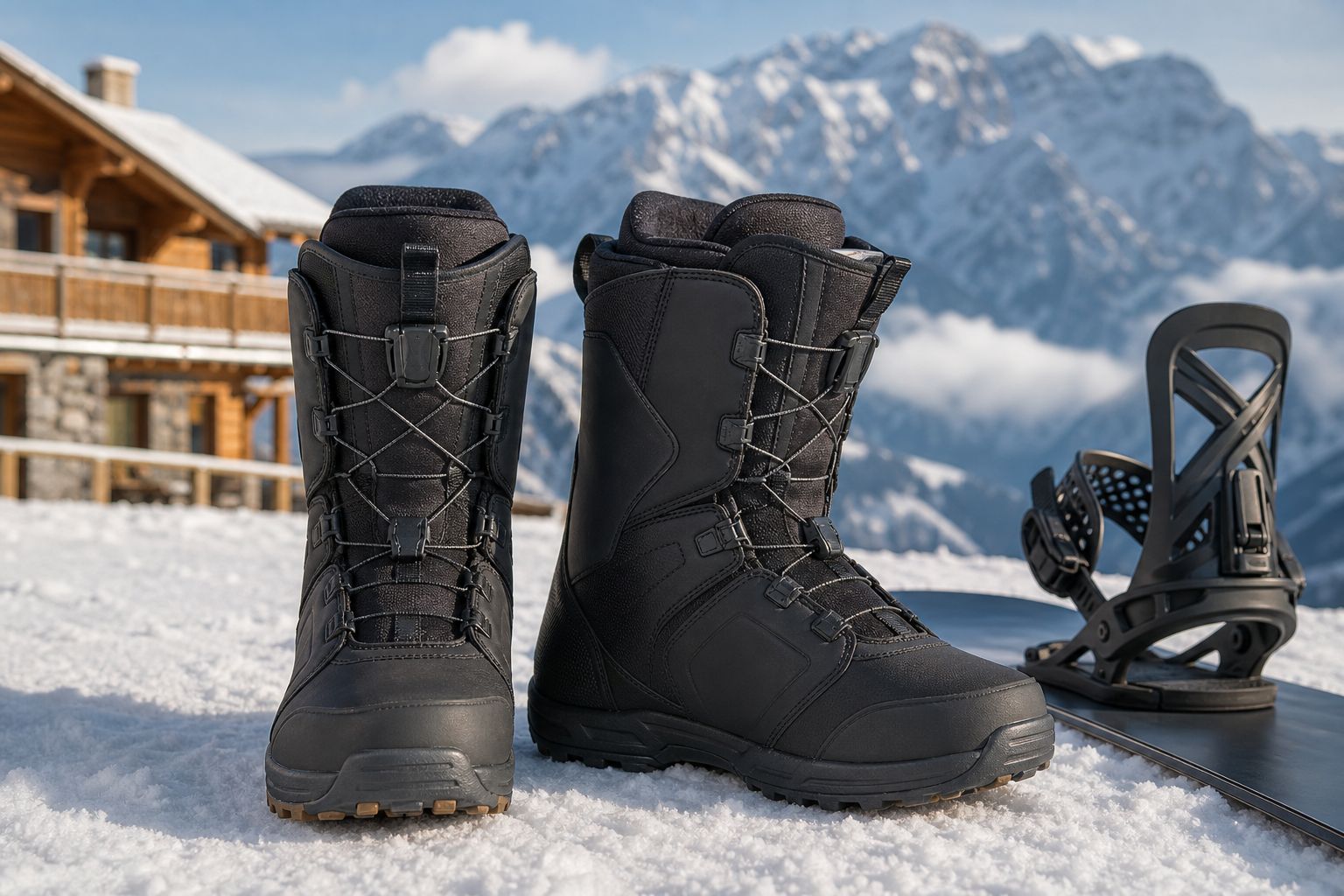
Boots are the one thing worth buying before anything else, and the one thing worth buying new.
Visual: SBTV editorialWhat it actually costs to start snowboarding
Snowboarding is expensive and most guides will not tell you by how much. Here are the actual numbers, with sources and a date on them, and an honest view of which ones you can avoid.
Read this before the numbers
Every figure on this page is a range with a source and a date. That is deliberate. Resorts use dynamic pricing that swings a lift ticket by forty per cent depending on the day you click; gear moves thirty to forty per cent between a July clearance rack and an October shelf; airfares change hourly. Anyone quoting you one number for any of this is guessing.
The figures were checked in July 2026, which is deep off-season in the northern hemisphere. Some are therefore optimistic — gear especially. Expect autumn prices to be higher, and re-check anything you are about to spend real money on.
The tables below switch currency with the edition you are reading. Yen figures stay in yen, because that is what you will actually be charged in Japan.
The honest advice, before you spend anything
Do not buy equipment for your first day. Buy a beginner package — a lesson, rental gear and a beginner-lift ticket bundled together — and find out whether you like this before you own any of it. Around a third of people who try snowboarding never go back, and there is no shame in being one of them.
If you go back, buy boots. Not a board. Boots are the only piece of equipment that has to fit your specific foot, they are the piece that most determines whether a day is comfortable, and they are the worst thing to buy second-hand because the liners have already moulded to somebody else’s foot. Rent the board and bindings for another season while you work out what you actually want.
The order that saves the most money is: package, then boots, then outerwear, then board and bindings last. Almost everyone does it backwards.
Your first day, if you buy nothing
A beginner package is nearly always cheaper than the same three things bought separately, and it is the thing to ask for by name. Not every resort advertises it prominently.
Two things to know about lift tickets. First, the gap between booking ahead and walking up to the window is large and entirely avoidable — one resort we checked publishes a saving of thirty dollars a day, and another sells the same Japanese day pass for over four thousand yen less online. Second, at the big destination resorts a walk-up peak-day ticket can pass three hundred dollars. If you are not committed to a specific mountain, a smaller local hill will teach you the same skills for a fraction of it.
Rental is the other place to book ahead. Several shops discount pre-booked rentals by around a quarter, and multi-day rates cut the daily cost by roughly the same again.
Checked 25 July 2026Showing USD. Yen figures converted at Rates move; treat converted figures as indicative.
Your first day, if you buy nothing
A beginner package bundles a lesson, rental equipment and a limited lift ticket. It is almost always cheaper than buying the three separately, and it is the right way to find out whether you like this before spending anything else.
- Beginner packageLesson, rental and beginner-lift ticket, US resorts
- $135–$220
- Group lesson onlyAdult, US, 90 minutes to half a dayDynamic pricing
- $64–$175
- Private lessonPer hour, US. Usually covers one or two people
- $169–$325
- Rental, board + boots + bindingsPer day, US, basic package
- $45–$79
- Lift ticket, advanceMid-size US resort, booked ahead
- $79–$155
- Lift ticket, at the windowSame resort, walking up on the day
- $109–$159
Not sourced Current-season group-lesson prices at the big destination resorts were not published when this was checked — those schools take their pricing offline in the off-season.
Buying your own, item by item
These are bands, not prices. The low end is a genuine entry product, not a toy; the high end is what a committed rider spends after several seasons. Nothing here says you need the high end, and most of this list will not improve your riding in your first year.
- SnowboardEntry to high, new
- $210–$770
- BindingsEntry to high, new
- $100–$550
- BootsEntry to high, newSpend here first
- $120–$730
- HelmetEntry to high, newBuy new
- $50–$365
- GogglesEntry to high, new
- $29–$355
- JacketEntry to high, new
- $50–$700
- Snow pantsEntry to high, new
- $50–$700
- Gloves or mittensEntry to high, new
- $25–$400
- Base layersPer piece
- $36–$280
- Wrist guardsThe cheapest protection you can buy
- $27–$50
- Impact shortsOptional, and worth it for a first season
- $60–$200
What a complete setup actually comes to
Sensible choices throughout — not the cheapest of everything, not the best of anything. The spread between these three rows is the single most useful number on this page.
- Everything new, at autumn pricesBoard through wrist guards, bought when the season stock lands
- $1,400–$2,200
- Everything new, on end-of-season saleThe same list bought in spring or summer
- $1,000–$1,650
- Mostly used, helmet newSecond-hand board, bindings and outerwear
- $590–$1,100
Not sourced Used prices for outerwear and goggles were not reliably sourceable — the second-hand market for those is local and inconsistent.
Japan, in yen
What you will actually be charged on the mountain. Lift passes in Japan are typically a fraction of a US destination-resort day, which is a large part of why the trip maths works at all.
- Lift pass, Nozawa OnsenAdult, one day
- ¥7,500≈ $46
- Lift pass, Hakuba ValleyAdult, one day, all-mountain
- ¥10,400–¥11,100≈ $64–$68
- Lift pass, Niseko UnitedAdult, one day. Low end is late spring, high end is peak JanuaryDynamic pricing
- ¥6,300–¥13,500≈ $39–$83
- Lift pass, RusutsuAdult, one day. Online is ¥4,200 cheaper than the windowBook online
- ¥12,000–¥16,200≈ $74–$100
- Rental, per dayBoard, boots and bindings, basic package
- ¥8,000–¥10,400≈ $49–$64
- Rental, five to seven daysPer day, once the multi-day discount applies
- ¥5,800–¥6,300≈ $36–$39
- Group lesson, EnglishHalf day to full day, adult
- ¥9,000–¥25,000≈ $55–$155
- Airport coachNew Chitose to Niseko or Rusutsu, one way
- ¥5,500–¥6,600≈ $34–$41
A week in Japan from Singapore
One person, six riding days, mid-range accommodation, two days of lessons. No travel insurance and no gear purchase. The accommodation line is where this budget lives or dies.
- Return flightsSingapore to Sapporo, peak JanuaryFares move daily
- $465–$890
- Seven nights, mid-tierNear a major resortNiseko in January runs far higher
- $1,355–$2,715
- Six-day lift passGrand Hirafu
- ¥63,500≈ $390
- Six-day rentalBasic package
- ¥30,080≈ $185
- Two days of lessonsGroup, English
- ¥50,000–¥58,000≈ $310–$355
- Airport transfers, returnCoach
- ¥11,000–¥12,000≈ $68–$74
- Food and incidentalsEstimated, not sourcedOur estimate
- $325–$545
Not sourced The food line is our own estimate rather than a sourced figure, and it is the one number here you should replace with your own.
Buying your own
Below are bands, not prices. The low end of each is a real, functional entry product; the high end is what somebody spends after several seasons of knowing what they want. Almost nothing at the high end will make you better in your first year.
Two exceptions to the buy-cheap advice. Helmets should be new, every time — you cannot see the damage that makes a used one useless, and you have no idea what it has already absorbed. And boots deserve more of your budget than their share of the list suggests, for the reasons above.
The used market is genuinely good for boards, bindings and outerwear. It is poor for boots and pointless for helmets. Skis and boards at the end of a season, in spring clearance, are the single largest saving available to anyone patient enough to wait.
Related lesson
Watch the movement.
This clip matches the guide. YouTube loads only when you press play.

Setup / Board, boot & gear fit / 4:15
This Snowboard Is A Beast!!! - Bataleon Tornado Review
By SnowboardProCamp
Setup / Board, boot & gear fit / 6:32
See How To Make A Snowboard | Whitelines Snowboarding
By Whitelines SnowboardingWhat a season costs once you own everything
Owning gear moves the cost, it does not remove it. A season pass at a mid-size resort will usually beat about six or seven day tickets, which is the honest break-even to work out before you buy one. Below that, day tickets booked in advance win.
The costs people forget: getting there, parking at the bigger resorts, food on the mountain, and the tune or wax that keeps a board working. None of them are large individually. Together they routinely add half again to what people budget.
Travel insurance that actually covers snowsports is the one line nobody wants to pay and everybody should. Read what the policy says about off-piste, because a lot of them stop at the resort boundary — and in Japan the resort may bill you for the rescue.
Japan, and why the maths works
The counter-intuitive thing about a Japan trip is that the mountain is the cheap part. A full day at a serious Japanese resort typically costs less than half a peak-day ticket at a US destination resort, and often much less. Rental and lessons are comparable to anywhere.
What costs money is getting there and sleeping. Accommodation near the best-known resorts in January is priced accordingly, and the difference between staying in Niseko in peak season and staying somewhere like Nozawa or a valley town in Hakuba is measured in thousands, not hundreds. If your budget is tight, that one choice moves more money than every other decision on this page combined.
Book the airport coach in advance and take the online price. It is a fixed, published fare and there is no reason to pay the walk-up rate.
Where the numbers below are weakest
We would rather tell you which figures to distrust than present all of them with the same confidence.
The food line in the trip budget is our own estimate, not a sourced figure — it is the number you should replace with your own habits. Current-season group lesson prices at the biggest US destination resorts were not published when we checked, because those schools take their pricing offline out of season. Gear bands were captured during summer clearance and will read low against an autumn shelf. And used prices for outerwear and goggles were not reliably sourceable at all, because that market is local and inconsistent.
Everything else has a source, and the sources are listed at the bottom of this page.
Profile-led equipment
Equipment profiles for this guide
Start with the fit, flex or compatibility you need. These links show the market; they are not reviews or winners.
- Fit + flex profile · Start hereOptional profile examplesSee market examples
Soft-to-medium snowboard boot profile
A forgiving category many learners can compare after establishing the right shell volume and heel hold.
Check: Fit in person with one thin snowboard sock; compare support, not just flex numbers, and reject numbness or sharp pressure.Before buying: This is a profile, not a product pick. A supportive medium boot may suit some beginners better than a very soft one, and flex scales vary by maker.
- Head protection · Start hereOptional profile examplesSee market examples
Snow-sports helmet
Designed for snow-sports fit, coverage and cold-weather use.
Check: It should sit level, move with the scalp and pair with goggles without a large gap. - Impact protection · Useful nextOptional profile examplesSee market examples
Snowboard wrist guards
A beginner-oriented layer of wrist protection during frequent low-speed falls.
Check: Confirm compatibility under your gloves and follow the guard maker’s sizing guidance.