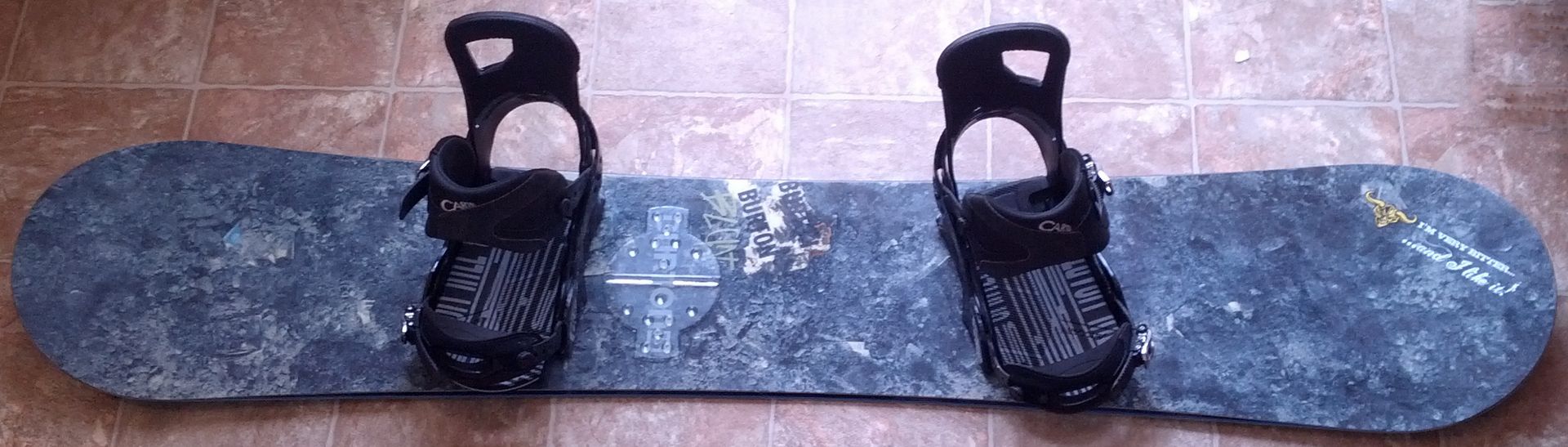
Read a board in layers: outline from above, profile from the side and flex under load.
Photo: BurtonbluntsnowboardLicenseSnowboard shapes, camber, rocker and flex—in plain English
Shape is the outline. Profile is the bend seen from the side. Flex is how readily the board bends and twists. Keep those three ideas separate and the catalogue starts making sense.
True twin, directional twin and directional
A true twin is symmetrical in shape and usually flex, with a centred stance. It feels the same riding regular or switch and is common in park boards. A directional twin keeps a twin-like feel but may use a setback stance, longer nose or directional flex for more all-mountain range.
A directional board is designed to travel mainly one way. Powder shapes often add a longer or wider nose, shorter tail, taper or setback inserts to help the nose plane in soft snow.
Shape drawing / match the job
No board profile wins every day.
Read outline from above, profile from the side and flex under load.Symmetrical nose and tail support switch riding. Camber adds grip and energy but asks for deliberate edge control.
A fuller nose, taper and setback help the front plane while the narrower tail sinks. Switch riding becomes less natural.
Blunt ends preserve a long effective edge. The precise, stiff platform suits deliberate carving—not relaxed first-day skids.
Camber, rocker and flat
Traditional camber arches between the contact points when unweighted. It stores energy, holds an edge well and feels precise, but can be less forgiving. Rocker—also called reverse camber—curves the tips away from the snow, making turn initiation and powder float easier while shortening the effective edge.
Flat profiles sit closer to the snow and split the difference. Hybrid profiles combine these zones, so read the maker’s diagram rather than trusting a marketing name.
- Camber: grip, pop and precision
- Rocker: float and easier pivoting
- Flat: stable, direct middle ground
- Hybrid: location of each zone matters
Soft, medium and stiff
Longitudinal flex is nose-to-tail bending. Torsional flex is twisting across the board. Soft boards are easier to press and steer at lower speed. Medium boards cover the broadest all-mountain use. Stiff boards stay composed at speed and under strong input, but demand more deliberate movement.
Flex ratings are not standardized across brands. A “6” from one maker is not guaranteed to match a “6” from another.
Related lesson
Watch the movement.
This clip matches the guide. YouTube loads only when you press play.

Setup / Board, boot & gear fit / 2:21
DO I NEED A TWIN OR DIRECTIONAL SNOWBOARD SHAPE?
By Nidecker Snowboards
Setup / Board, boot & gear fit / 9:09
How to Choose the Right Snowboard with Mark Sollors | Burton: Take It From A Pro
By BurtonPark, all-mountain, freeride and powder
Park boards are often twin or directional twin, with flex chosen around rails, jumps or both. All-mountain boards aim to cover groomers, side hits and occasional soft snow. Freeride boards prioritize speed, edge hold and directional terrain. Powder boards trade switch symmetry for float, planing and tighter movement in soft snow.
These labels overlap. A skilled rider can use many boards in many places; the label describes the design priority, not a locked rule.
A sane first-board filter
Start with boot size, rider weight and the terrain you actually ride. Then choose width, length, shape, profile and flex. For many progressing resort riders, a medium-flex all-mountain directional twin with some camber and early-rise tips is an understandable demo starting point—not a universal prescription.
Demo if possible. Boards inspire strong opinions because feel is personal, snow varies and riders adapt. SBTV explains the vocabulary; it does not crown one shape.
Profile-led equipment
Equipment profiles for this guide
Start with the fit, flex or compatibility you need. These links show the market; they are not reviews or winners.
- Demo before buying · Useful nextOptional profile examplesSee market examples
All-mountain board demo shortlist
A broad category to test after rental days—not a claim that one brand, flex or profile works for everyone.
Check: Treat rider weight and boot-compatible width as non-negotiable, then demo different flex and camber or rocker profiles on the terrain you ride.Before buying: Board choice gets personal fast. Treat retailer results as a market scan, then talk to a good shop and rent or demo before committing.