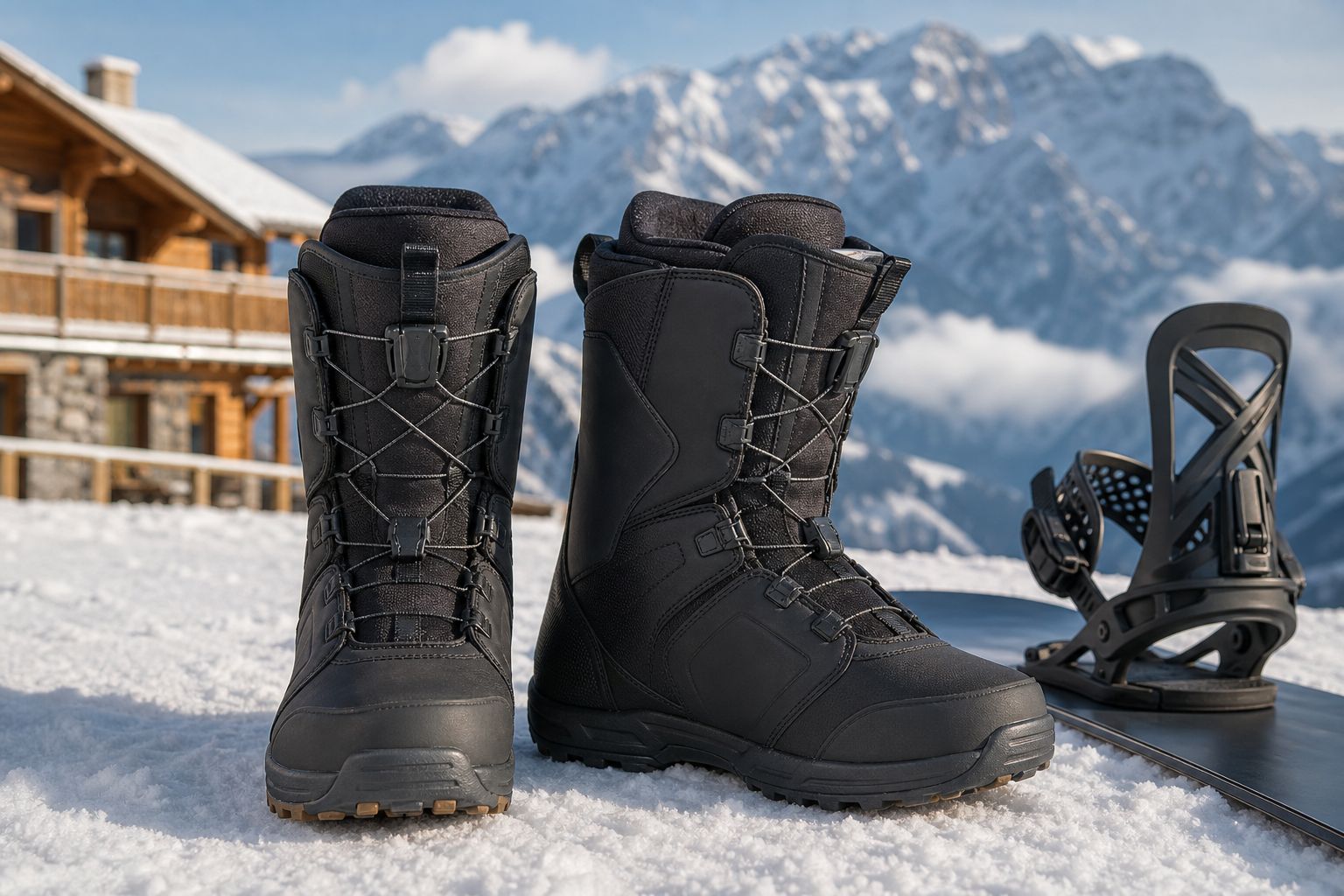
The shell, liner, insole, outsole and closure system work together. None of them can compensate for the wrong foot shape.
Visual: SBTV editorialSnowboard boots explained: laces, BOA and Step On
A snowboard boot is the steering wheel, suspension and heater between your foot and the board. Fit comes first; the closure system comes second.
What the boot is doing
The outer shell supports the ankle and transfers movement into the binding. Inside it, the liner holds the heel, insulates the foot and gradually packs out. The insole supports the foot, the outsole grips the ground and the closure system wraps everything together.
A boot should feel evenly snug in a riding stance. Sharp pressure, numbness and a heel that lifts freely are fit problems—not things to solve by overtightening.
Fit drawing / boot shell
Held everywhere. Crushed nowhere.
The flexed riding stance is the useful test—not standing bolt upright for ten seconds.Toes can brush the liner upright, then ease back when the knees flex. The heel stays connected without numbness or a sharp pressure ridge.
More lace tension cannot rescue the wrong shell volume. Free heel movement, curled toes, burning or numbness are reasons to try another size or shape.
Traditional, quick-pull and hybrid laces
Traditional laces are simple, field-replaceable and let you vary tension by eye, but they take longer and need two hands. Quick-pull systems divide the shell into zones using locking handles. Hybrid boots combine conventional laces with a BOA dial or internal heel-retention system.
- Traditional: easy to understand and repair
- Quick-pull: fast, usually zonal and glove-friendly
- Hybrid: extra heel or ankle control, with more parts
Single BOA versus dual BOA
A single BOA dial normally tensions one routed cable path across most of the shell. It is fast and micro-adjustable, but one setting affects the whole zone. Dual BOA boots use two independent zones—commonly upper and lower—so the rider can tune shin support separately from the forefoot.
More dials do not rescue the wrong shape. Try the boot on for at least 15 minutes and flex in it before deciding.
Related lesson
Watch the movement.
This clip matches the guide. YouTube loads only when you press play.
Setup / Board, boot & gear fit / 1:51
Snowboarding: How to Size Snowboard Boots
By REI
Setup / Board, boot & gear fit / 11:50
New Snowboard Boot Day & How To Fix Your Snowboard Boot Pain
By SnowboardProCampWhere Step On fits
Burton Step On is a boot-and-binding interface, not a type of lacing. Compatible boots connect at dedicated heel and toe points and must be paired with a compatible Step On binding. K2 Clicker uses its own compatible boot interface. Nidecker Supermatic is different again: it accepts most conventional snowboard boots through a step-in rear-entry binding.
Treat every fast-entry system as an ecosystem. Check the exact boot, binding size and board mounting compatibility before spending.
Flex and brands without the religion
Soft boots allow more ankle movement and suit many beginners and freestyle riders. Medium flex is the broad all-mountain middle. Stiffer boots offer more support and faster response, but punish poor fit and can feel tiring.
Common boot specialists and snowboard brands include Burton, ThirtyTwo, Vans, Deeluxe, Ride, K2, Nidecker, Salomon, DC, Nitro, Northwave and Yonex. Their size labels are not interchangeable. Buy the shape that holds your heel and matches your foot, not the logo that wins the group chat.
Profile-led equipment
Equipment profiles for this guide
Start with the fit, flex or compatibility you need. These links show the market; they are not reviews or winners.
- Fit + flex profile · Start hereOptional profile examplesSee market examples
Soft-to-medium snowboard boot profile
A forgiving category many learners can compare after establishing the right shell volume and heel hold.
Check: Fit in person with one thin snowboard sock; compare support, not just flex numbers, and reject numbness or sharp pressure.Before buying: This is a profile, not a product pick. A supportive medium boot may suit some beginners better than a very soft one, and flex scales vary by maker.
- Boot interface · Start hereOptional profile examplesSee market examples
Thin snowboard socks
Manages moisture without adding folds or excess bulk inside a fitted boot.
Check: Use one over-the-calf pair; doubling socks can reduce circulation and control. - Drying · Optional progressionOptional profile examplesSee market examples
Low-heat boot dryer
Helps dry liners and gloves between consecutive Japan storm days.
Check: Use gentle heat and follow the boot and liner manufacturer’s care limits.