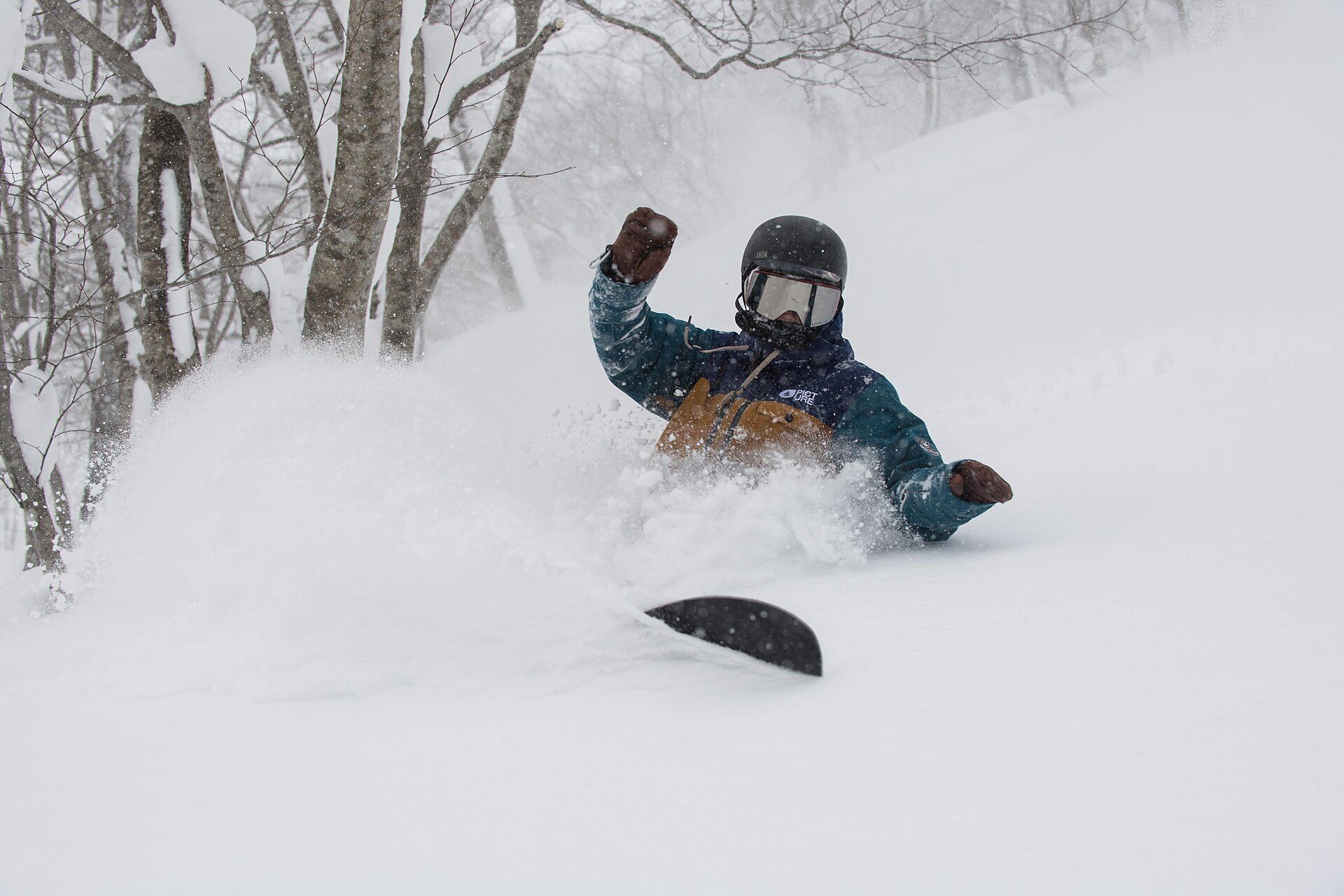
Japan layering is a moisture-management problem: stay dry underneath, block wind and snow outside, and keep vents usable.
Photo: Sawa-loveLicenseWhat to wear snowboarding in Japan
Japan is not one snow forecast. Build a layer system you can vent, dry and repeat across cold Hokkaido mornings, stormy Honshu days, warm trains and overheated lodges.
Build one adjustable three-layer system
Start with a close-fitting merino or synthetic base layer that moves sweat away from the skin. Add a breathable fleece or light insulated mid-layer for warmth. Finish with a waterproof, wind-resistant jacket and pants or bib that allow a riding stance without pulling tight.
An insulated jacket is simple in persistent cold; a shell plus removable insulation is more adaptable across regions and spring temperatures. Cotton next to the skin stays wet and works against the system.
- Base: moisture movement
- Mid: removable warmth
- Shell: wind and wet-snow protection
- Vents: temperature control before sweat builds
Dress the feet and hands for circulation
Wear one smooth, thin-to-medium snowboard sock. A second sock can take up boot volume, create folds and reduce circulation—the opposite of warmer feet. Keep a dry spare pair for the next day rather than layering both inside the boot.
Mittens usually retain more warmth than gloves, while gloves offer more dexterity. Waterproof shells, removable liners and a spare dry liner are useful on multi-day trips. Do not place damp boots or gloves against damaging high heat; open and air them as soon as the day ends.
Prepare for flat light, wind and chair time
Storm riding can flatten terrain contrast even when the snow is excellent. Carry a low-light goggle lens or a proven all-conditions lens, and check that the goggles seal comfortably with the helmet. A neck tube or balaclava closes the exposed gap without bulky scarves.
Lift rides add wind chill while queueing and active riding add heat. Zip vents and remove a mid-layer before sweat soaks the base; add it again before a long exposed lift.
- Low-light lens
- Helmet-compatible goggles
- Neck tube or balaclava
- Sunscreen and lip balm
- Pocket for the removed layer or a small secure pack
Adapt the system by region and month
Hokkaido can be persistently cold with frequent light snow, so dependable face, hand and mid-layer warmth matters. Honshu resorts span high inland mountains, maritime storms and milder lower bases; wetter snowfall increases the value of shell waterproofing and spare dry gloves.
Spring changes the equation again. Cold mornings can become warm afternoons, so lighter insulation, ventilation and sun protection matter more than packing the thickest possible jacket. These are tendencies, not a replacement for the resort forecast.
Related lesson
Watch the movement.
This clip matches the guide. YouTube loads only when you press play.

Setup / Layers & protection / 4:52
Layer for a full day on snow
By SnowboardProCampPack for the train, lodge and drying room
Japan trips often move through warm airports, trains, buses and restaurants before reaching snow. Keep the travel outfit separate from the damp riding system and use a ventilated or waterproof bag to isolate wet gloves, neckwear and shells on the return journey.
At the accommodation, open boots fully, remove liners or footbeds when appropriate and use the designated drying area without blocking heaters or cooking heat-sensitive foam. Rotate socks and base layers so the next morning starts dry.
- Dry bag or washable tote for wet pieces
- Travel layer that is not your soaked riding mid-layer
- Spare socks and glove liners
- Small detergent or sink-wash plan for longer trips
Make the morning decision from real conditions
Check the resort’s official weather, wind, lift and road status before leaving. “Japan powder” does not tell you whether the upper lifts are on wind hold, whether rain is reaching the base or whether the temperature will climb rapidly after lunch.
Choose the day’s insulation and lens from that report, then take one small removable layer rather than wearing every layer at breakfast. If a guide or instructor gives a local recommendation, use it—they are seeing the mountain you are about to ride.
Profile-led equipment
The Japan layering kit
Seven pieces, layered. Japan’s cold is a wet cold, so the shell and the base layer do more work than the mid layer.
- Next to skin · Start hereOptional profile examplesSee market examples
Moisture-managing base layers
Moves moisture away from the body and makes warmth easier to regulate.
Check: Choose synthetic or wool fabric, a close but mobile fit and avoid cotton. - Insulation · Useful nextOptional profile examplesSee market examples
Adjustable mid-layer
Adds removable warmth for cold lifts without locking you into one heavy jacket.
Check: Check that it layers without compressing movement or blocking shell ventilation. - Storm layer · Start hereOptional profile examplesSee market examples
Waterproof shell jacket
Blocks wind and wet snowfall while letting you adjust insulation underneath.
Check: Look for usable vents, helmet-compatible hood movement and cuff overlap. - Storm layer · Start hereOptional profile examplesSee market examples
Snow pants or bib
Keeps the lower body dry through seated breaks, falls and deep snow.
Check: Confirm boot gaiters, unrestricted squatting and enough room for optional pads. - Hands · Start hereOptional profile examplesSee market examples
Waterproof gloves or mitts
Keeps hands protected during storms, binding work and long lift rides.
Check: Test dexterity on buckles and make sure cuffs overlap your jacket cleanly. - Storm accessory · Useful nextOptional profile examplesSee market examples
Neck warmer or balaclava
Closes the gap around the collar and adds adaptable face coverage.
Check: Choose breathable fabric that sits comfortably under the helmet without bunching. - Vision · Start hereOptional profile examplesSee market examples
Snow goggles + low-light lens
Protects the eyes and keeps terrain features readable in wind, snow and flat light.
Check: Test with your helmet and choose a lens for the conditions you ride most.